Alex Neumann · 24 September 2026
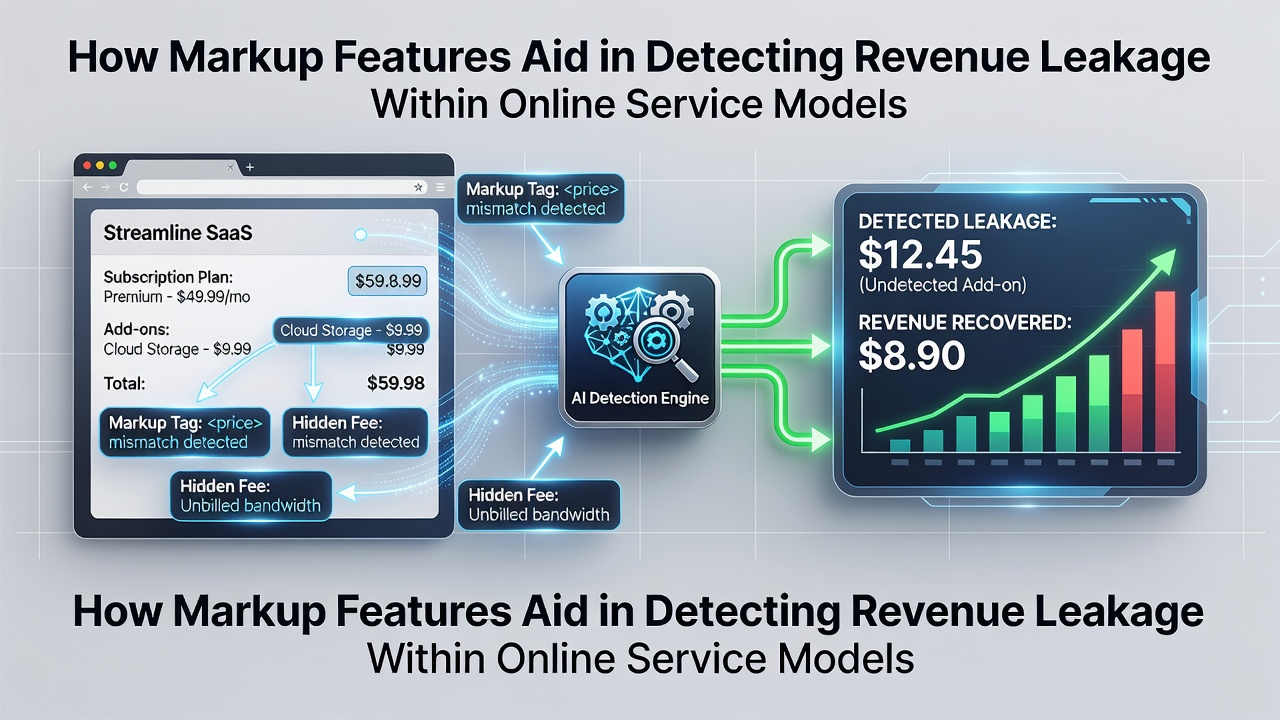
How Markup Features Aid in Detecting Revenue Leakage Within Online Service Models
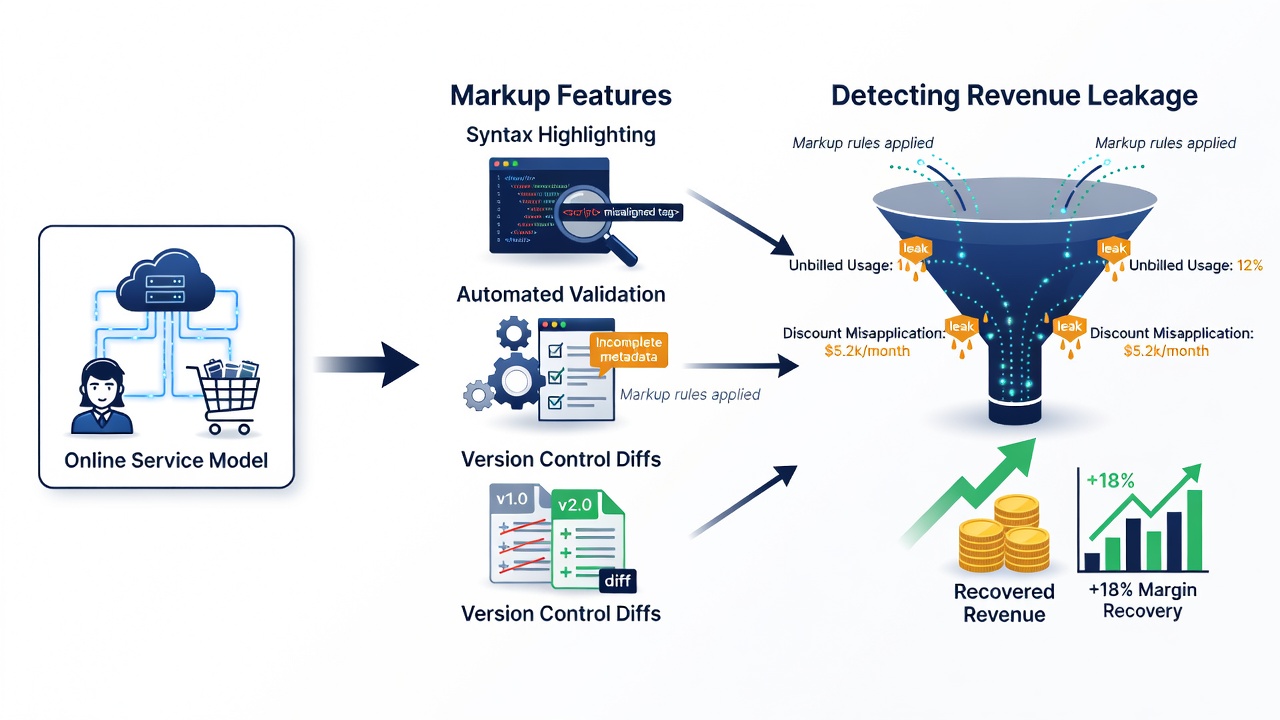
Online service models such as subscription platforms and cloud-based offerings generate complex streams of usage data, contract terms, and payment records, and revenue leakage occurs when discrepancies in these streams go unnoticed. Markup features provide structured annotation tools that let analysts tag specific entries in logs or invoices, creating traceable markers that highlight mismatches between billed amounts and actual service delivery. These markers function as digital flags that persist across system updates, allowing teams to trace back through historical records without losing context from earlier reviews.
Core Mechanisms of Markup in Billing Systems
Markup tools operate by overlaying metadata on raw transaction data, and this metadata includes categories like overage disputes, discount application errors, or unrecorded usage spikes. Analysts apply these tags through interfaces that support color coding, comment threads, and priority levels, which then feed into reporting dashboards that surface patterns over time. Research from the OECD indicates that organizations using such annotation layers reduce unidentified billing gaps by integrating them directly into existing CRM and ERP workflows, and this integration happens without requiring separate data exports that often introduce additional errors.
Systems built around markup also support version control on annotations themselves, so when new billing rules roll out in September 2026, previous tags remain linked to their original data points while new ones capture shifts in pricing tiers. This continuity proves essential in subscription environments where customers move between plans frequently, and each plan change creates potential for leakage if credits or proration calculations fall out of sync.
Practical Applications Across Service Categories
Take streaming services that meter content delivery by the minute, where markup features allow reviewers to isolate sessions that ended prematurely yet still charged full rates. Observers note that these tagged sessions often cluster around specific geographic regions or device types, revealing infrastructure issues rather than isolated user errors. In enterprise SaaS environments the same approach applies to seat-based licensing, and analysts mark records where concurrent user counts exceed licensed limits without triggering additional invoices.
European Commission analyses of digital market practices show that annotation-driven audits scale effectively when teams distribute review tasks across regional offices, because markup tags carry standardized fields that translate across languages and regulatory requirements. Canadian studies on digital service taxation further demonstrate that tagged datasets simplify compliance reporting by pre-sorting entries that affect cross-border revenue recognition.
Data Integration and Pattern Recognition
Markup layers connect naturally with analytics engines that apply rule sets to already-tagged records, and this combination accelerates detection of recurring leakage sources such as failed payment retries or delayed invoice generation. When an annotation includes a timestamp and user identifier, downstream algorithms can correlate it with support ticket histories or churn predictions, producing outputs that list high-impact cases first. Figures from academic reviews at institutions studying subscription economies reveal that platforms incorporating markup achieve faster resolution cycles because the tagged items carry built-in audit trails that satisfy both internal finance teams and external auditors.
Yet the effectiveness depends on consistent taxonomy across markup categories, and organizations that standardize terms like "proration mismatch" or "overage omission" see higher inter-team agreement on what constitutes a leakage event. Without that consistency, duplicate tags proliferate and dilute the value of the system over successive quarters.
Conclusion
Markup features deliver a practical layer for surfacing revenue leakage by turning unstructured billing data into annotated, queryable records that support both immediate corrections and longer-term process improvements. As online service models continue to evolve through 2026 and beyond, the ability to maintain persistent markers across system changes remains central to accurate revenue capture.