Ellis Krause · 10 September 2026
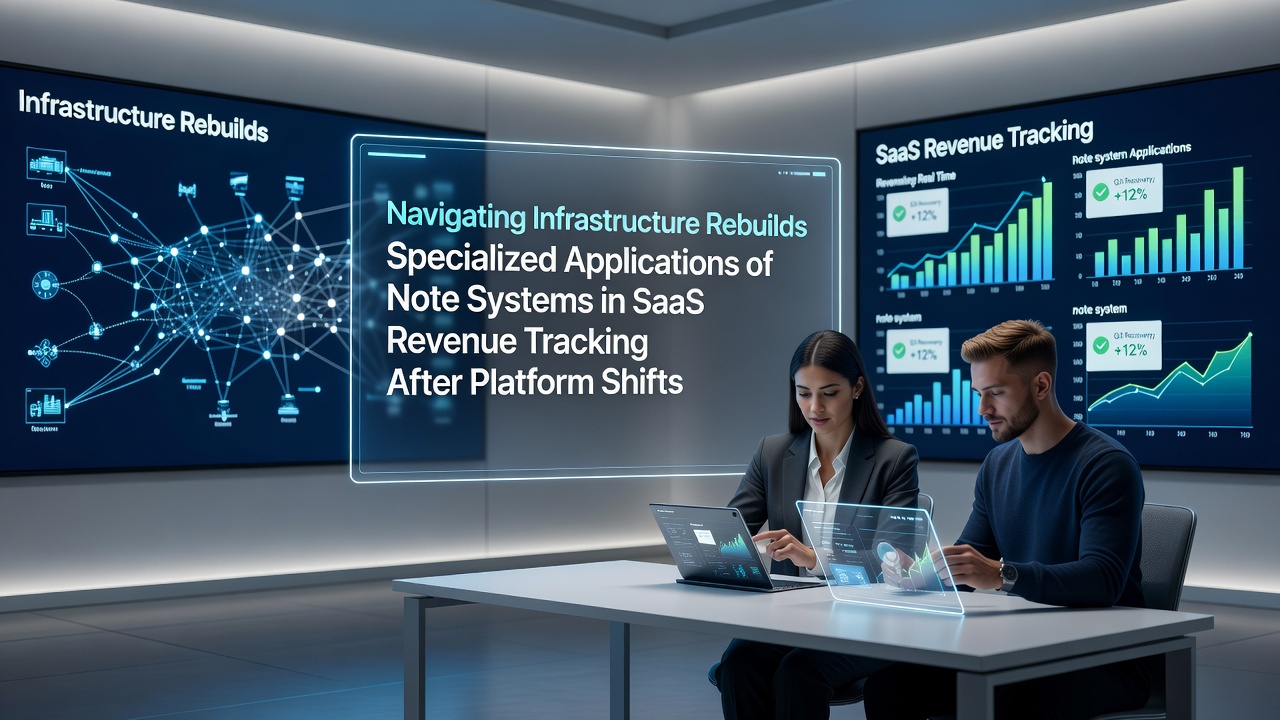
Navigating Infrastructure Rebuilds: Specialized Applications of Note Systems in SaaS Revenue Tracking After Platform Shifts
Platform shifts in SaaS environments often require complete infrastructure rebuilds that disrupt established revenue tracking processes, and organizations turn to specialized note systems to maintain accurate records throughout these transitions. These systems allow teams to document every adjustment in billing cycles, subscription tiers, and usage metrics while the underlying architecture undergoes fundamental changes, which helps prevent gaps in financial reporting that might otherwise extend for months.
Platform Shifts and Their Impact on Revenue Data Integrity
When SaaS providers migrate from legacy platforms to new infrastructures, revenue streams tied to customer contracts frequently encounter synchronization issues because legacy databases no longer align with updated APIs or cloud services. Data shows that companies completing such rebuilds in 2025 reported temporary discrepancies in recurring revenue figures that lasted an average of 12 weeks, according to industry reports from the Organisation for Economic Co-operation and Development. Note systems address this by capturing granular details on each migration step, including timestamped entries for contract amendments and prorated billing calculations that connect directly to updated revenue ledgers.
Core Functions of Note Systems in Tracking Scenarios
Specialized note systems designed for SaaS environments integrate with revenue management tools through structured tagging that categorizes entries by revenue type, customer segment, and infrastructure component affected during the rebuild. Teams log every modification to subscription models alongside corresponding adjustments in payment gateways, which creates an auditable trail that supports compliance checks required by regulatory frameworks in multiple jurisdictions. These applications extend beyond simple documentation because they enable cross-referencing of historical data points with real-time outputs from new platforms, allowing analysts to reconstruct revenue timelines without relying solely on automated reports that may contain incomplete fields during transition periods.
Specialized Applications During Active Rebuild Phases
During infrastructure rebuilds, note systems facilitate parallel tracking of revenue recognition under both old and new system rules, which proves essential when contracts span multiple billing periods that straddle the migration date. Observers note that one common application involves creating linked note clusters for each customer cohort, where updates on service level changes appear alongside projected impacts on annual recurring revenue calculations. This approach supports finance teams in reconciling figures reported to stakeholders while engineers continue deploying new server configurations or database schemas. Research from the National Institute of Standards and Technology indicates that structured documentation practices reduce errors in financial projections by up to 30 percent in complex IT transitions, and note systems provide the mechanism to implement such practices at scale.

Another application centers on version-controlled notes that record every rollback or patch applied during rebuild testing, because such events directly influence usage data that feeds into revenue models. Teams attach these notes to specific revenue line items, which allows later review of how temporary service interruptions translated into credits or adjusted invoices. The process becomes particularly relevant when platform shifts involve third-party integrations that handle payment processing, since any delay in those connections requires immediate notation to preserve accurate deferred revenue balances.
Integration with Compliance and Reporting Standards
Regulatory requirements for revenue recognition under standards such as ASC 606 demand precise documentation of performance obligations, and note systems help SaaS companies meet these obligations even when core platforms change. Entries in these systems often include references to contract clauses that remain valid across infrastructure versions, along with evidence of customer acknowledgments collected during the transition. The European Commission has published guidance on digital service transitions that emphasizes the need for continuous audit trails, and specialized note applications align with those recommendations by exporting formatted reports that auditors can review without accessing every underlying system log.
By September 2026, many SaaS providers expect to complete multi-year rebuild projects initiated in response to evolving data sovereignty rules, and note systems will continue serving as the connective layer between operational changes and financial reporting outputs. This timeline aligns with anticipated updates to international accounting interpretations that place greater emphasis on real-time visibility into revenue streams during technology migrations.
Conclusion
Specialized note systems deliver structured support for revenue tracking throughout SaaS infrastructure rebuilds that follow platform shifts, by maintaining detailed, searchable records that bridge gaps between legacy and new environments. These applications ensure that financial data remains consistent and compliant, even as technical components undergo extensive reconfiguration. Organizations that implement such systems report smoother handoffs between engineering and finance teams, which supports uninterrupted stakeholder reporting across extended transition periods.