
Viktor Koch · 8 October 2026
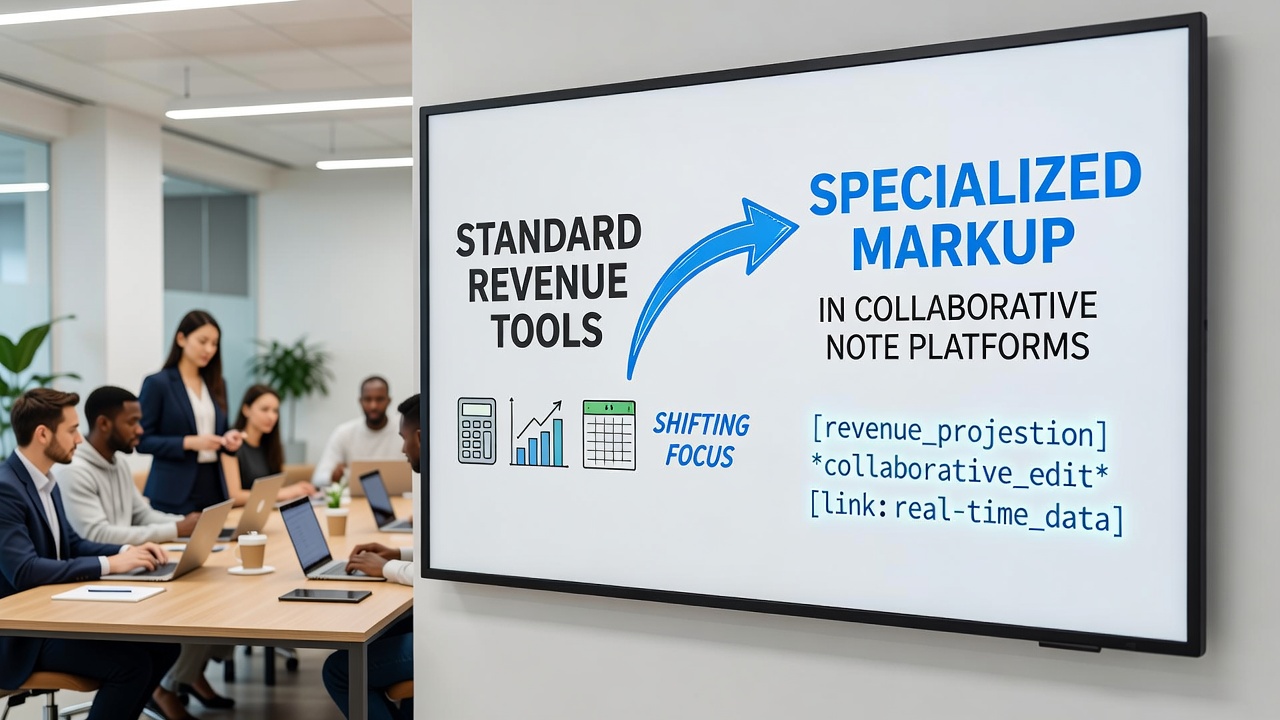
Shifting focus from standard revenue tools, how specialized markup in collaborative note platforms helps track subscription billing anomalies after major cloud migrations in digital service companies
Digital service companies have increasingly moved away from conventional revenue management systems in recent years because those platforms often struggle with the data inconsistencies that arise during large-scale cloud transitions, and specialized markup within collaborative note platforms offers a structured way to flag and monitor subscription billing discrepancies that surface in the process. Observers note that these note-based systems allow teams to embed custom tags directly into shared documents where billing records are discussed, which creates searchable layers of metadata that standard dashboards frequently overlook. Research from academic institutions shows that companies completing migrations between 2023 and 2025 encountered repeated mismatches between expected recurring charges and actual posted amounts, particularly when legacy databases were ported to new cloud environments without full reconciliation of subscription tiers.
Patterns Observed in Post-Migration Billing Data
Teams working in digital services report that anomalies such as duplicated charges, prorated amounts that fail to align with contract dates, and currency conversion errors become more visible once engineers and finance staff begin annotating the same note files with consistent markup conventions. Data compiled by Statistics Canada indicates that subscription-based firms in the technology sector experienced a measurable uptick in billing disputes during the second half of 2025, with many of those issues traced to incomplete mapping of customer identifiers after infrastructure shifts. Those who have studied these transitions know that the markup approach lets users highlight specific line items in billing exports and attach contextual notes about the migration steps that may have introduced the variance, turning what used to be scattered email threads into a single, queryable record.
Integration of Markup Features with Existing Workflows
Collaborative platforms equipped with markup syntax enable users to apply labels that distinguish between confirmed billing events and those still under investigation, which proves useful when multiple departments review the same dataset after a cloud cutover. One documented case involved a European digital media provider that layered markup tags onto shared notes to isolate instances where subscription renewals were processed under old pricing structures even though the backend had already updated to new cloud-hosted rules. The European Commission has published guidance on digital service transparency that underscores the value of auditable internal records, and companies adopting note-based markup have found it easier to generate the detailed logs required during compliance checks. What's interesting is how the same annotation system can also track the timing of each anomaly relative to specific migration milestones, giving analysts a chronological map without requiring separate project management software.
October 2026 Developments and Industry Adoption
By October 2026 several mid-sized digital service providers had begun publishing internal case studies that detailed how markup-driven note systems reduced the average time spent reconciling subscription ledgers after cloud moves. Figures from the Australian Competition and Consumer Commission reveal that consumer complaints about unexpected subscription charges rose again in early 2026, prompting companies to seek lighter-weight alternatives to heavy enterprise revenue tools that often require extensive customization. The markup method works because it lets teams embed rules directly into the notes, such as color-coded flags for currency mismatches or date-range violations, and then query across an entire workspace to surface every instance that matches a given pattern. Researchers at institutions focused on information systems have documented that this approach scales more readily for smaller teams than full-scale business intelligence suites, especially when the underlying cloud environment continues to evolve through incremental service updates.
Practical Applications Across Different Company Sizes
Smaller digital service outfits that lack dedicated revenue operations staff have turned to collaborative note platforms because the markup features require minimal training yet still produce structured outputs that feed into downstream accounting processes. Larger organizations, meanwhile, have layered the same annotation techniques onto existing documentation practices so that migration logs and billing reviews remain connected in one place. Evidence from multiple industry reports shows that anomalies frequently cluster around the first billing cycle after a major cloud migration, which makes the ability to retroactively search annotated notes particularly valuable when auditors request historical context. Those who've implemented these systems observe that the markup can also capture edge cases, such as grandfathered subscription plans that behave differently under new infrastructure, without forcing every exception into rigid database fields that may not accommodate them.
Conclusion
The shift toward specialized markup in collaborative note platforms reflects a broader recognition that subscription billing oversight benefits from flexible, human-readable annotation layers that complement rather than replace traditional revenue systems. Companies that have completed cloud migrations continue to refine their use of these markup conventions, and the resulting datasets provide clearer visibility into anomalies that would otherwise remain buried in export files. As digital service models keep expanding, the practice of embedding targeted markup within shared notes offers a practical method for maintaining accuracy across complex billing environments that change with each infrastructure update.